Starch-Gluten Separation: Practical Variables Process Engineers Watch Daily
In a corn wet mill, starch-gluten separation is rarely controlled by one lever. It is the result of upstream preparation, grind quality, stream discipline, equipment condition, and how consistently the plant holds its operating window during continuous production.
Mazerun works as an enzyme supplier for corn wet milling with a practical view of this stage: enzymes can support viscosity control, fiber release, cleaner downstream conversion, and steadier process behavior, but they perform best when the separation environment is understood. For process engineers, the daily focus is not a lab ideal. It is whether streams remain predictable enough for the plant to protect yield, uptime, and finished product quality.
This article reviews the variables engineers commonly watch around starch-gluten separation without relying on plant-specific parameters.
Why starch-gluten separation is sensitive
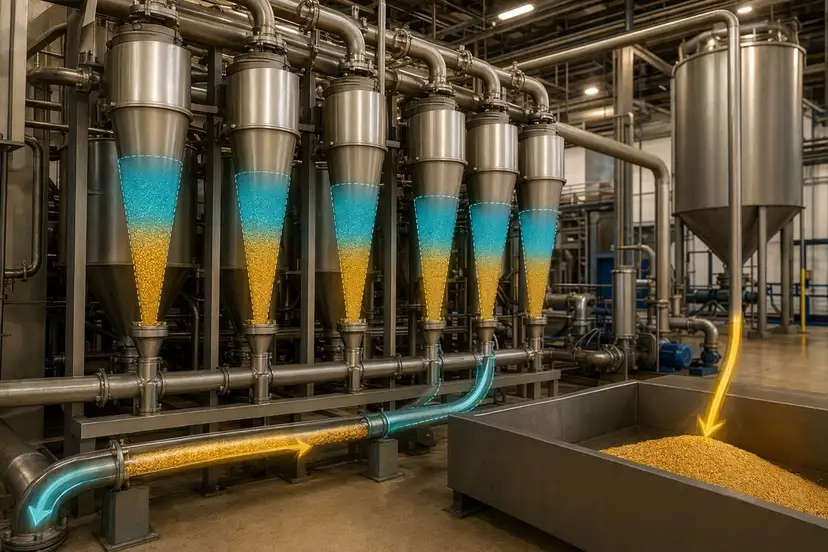
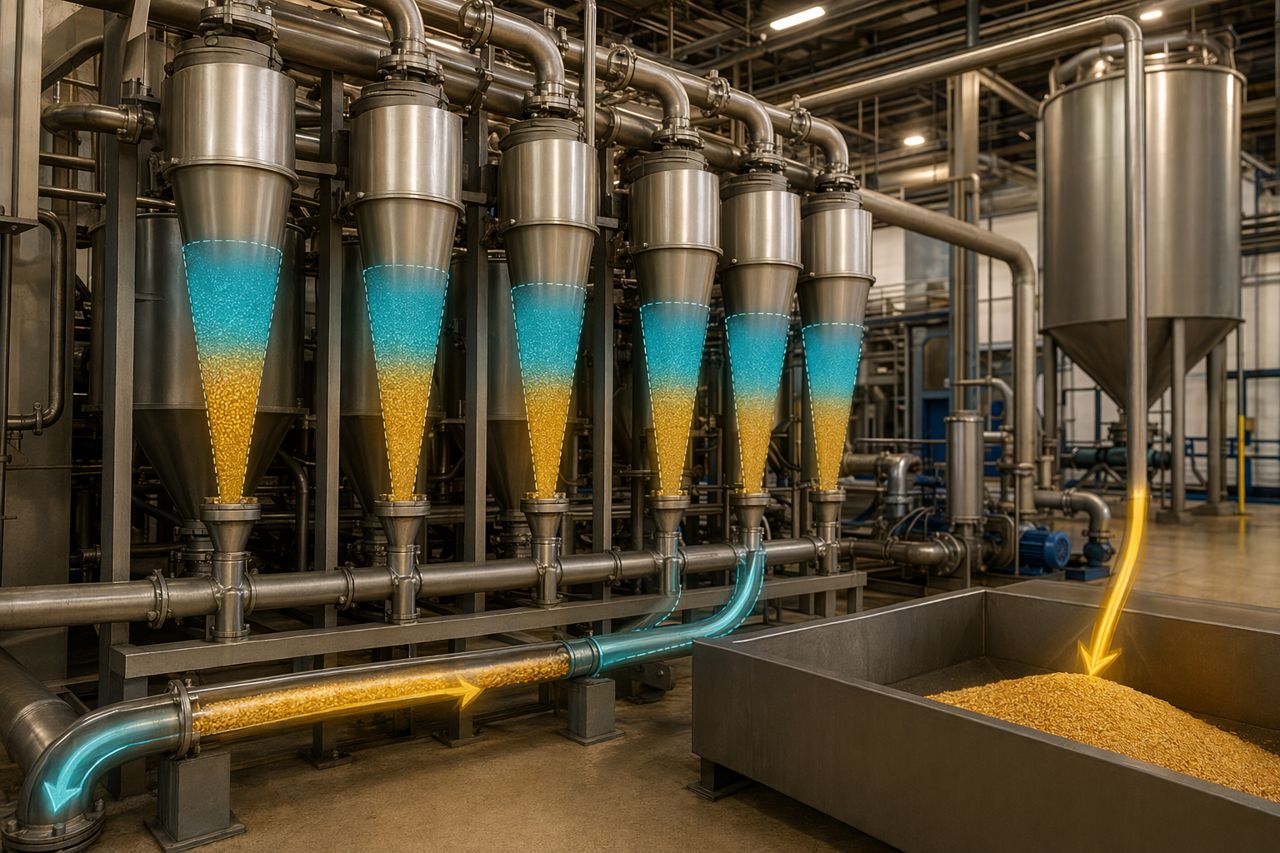
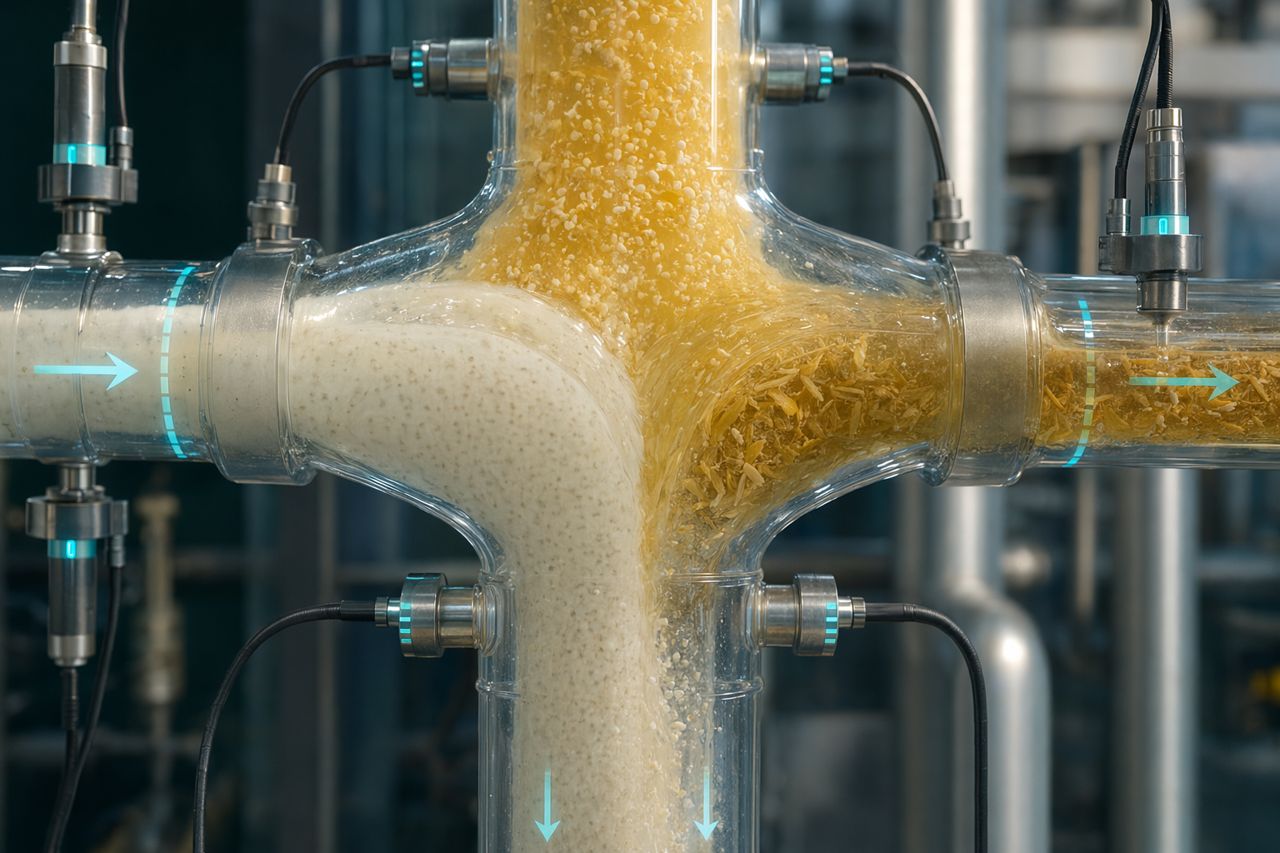
Starch and gluten separation depends on physical differences, but those differences are affected by how the kernel has been prepared and how the slurry behaves under load. Small upstream shifts can change viscosity, solids distribution, particle release, and the burden placed on hydrocyclones, centrifuges, screens, and filtration equipment.
Common symptoms include:
- Less consistent starch recovery
- Protein carryover into starch-rich streams
- Starch losses into gluten or fiber streams
- Higher recirculation burden
- Slower clarification or filtration
- More frequent cleaning pressure
- Increased variation entering liquefaction or saccharification
The separation system may still appear to be running, but downstream indicators often show that it is working harder.
Variable 1: density control and stream balance
Density is one of the first indicators process teams watch because it reflects whether solids are being presented to separation equipment in a manageable way. When density drifts, separation devices can lose sharpness. The result may be wider variation in overflow and underflow behavior, reduced starch concentration where it is expected, or more protein and fine fiber moving with the wrong stream.
A stable density profile helps operators make confident adjustments. An unstable profile often leads to chasing symptoms: valve changes, recycle adjustments, dilution changes, and more frequent sampling. For B2B buyers evaluating enzyme support, the important question is not whether an enzyme can solve density variation by itself. It is whether the enzyme program fits the actual solids profile and helps reduce avoidable viscosity or release-related instability before separation.
Variable 2: solids loading and hydraulic pressure on equipment
Solids loading affects residence behavior, separation sharpness, and mechanical stress. When the system is pushed beyond its comfortable operating window, hydrocyclones and centrifuges may still move material, but the cut quality can become less predictable.
Engineers typically watch for:
- Rising differential pressure trends
- Reduced separation contrast between streams
- Heavier recycle load
- Changes in pump behavior
- Increased screen blinding or filtration drag
- More variable downstream solids
In practical terms, solids loading is not only a capacity issue. It is also a consistency issue. A plant may accept short-term load variation, but repeated variation can compound into yield loss, cleaning time, and downstream conversion variability.
Variable 3: grind quality and starch release
Grind quality sets the stage for separation. If starch is not released cleanly, separation equipment is asked to correct what the milling step did not prepare. Overly coarse material may hold starch in fiber-rich fractions. Overworked material can increase fines, alter viscosity, and complicate clarification.
The target is not aggressive grinding for its own sake. The target is controlled release with minimal unnecessary fines and manageable slurry behavior. When evaluating enzyme options, Mazerun looks at how wet-end treatment may support release and viscosity behavior while respecting the plant's established grind strategy.
Questions engineers often ask include:
- Are starch losses linked to incomplete release or to separation inefficiency?
- Is fine fiber increasing carryover into starch-rich streams?
- Are screen loads changing after grind adjustments?
- Does downstream viscosity shift after upstream milling changes?
These questions help separate mechanical issues from biochemical support opportunities.
Variable 4: fiber carryover and fine particle behavior
Fine fiber can be one of the most persistent causes of separation difficulty. It can carry starch, interfere with stream clarity, burden filtration, and contribute to inconsistent downstream load. It may also make a process look like a separation equipment problem when the root cause is actually release, preparation, or screen performance.
Fiber carryover matters because it affects more than one stage. It can influence:
- Gluten concentration and quality
- Starch stream cleanliness
- Filtration rates
- Evaporator or dryer load
- Conversion consistency after liquefaction
- Cleaning frequency
Enzyme selection may be relevant where fiber structure, viscosity, or bound starch release is part of the challenge. The buyer value comes from matching the enzyme approach to the plant's actual bottleneck rather than applying a generic treatment across all cases.
Variable 5: viscosity and flow behavior
Viscosity is often where several upstream issues become visible at once. Changes in steep consistency, grind, solids loading, fines, and temperature history can all affect how slurry moves through the system. Higher viscosity can reduce separation sharpness, increase pumping energy, slow filtration, and create less stable process response.
For continuous-operation plants, viscosity control is valuable because it supports steadier equipment loading. It also reduces the amount of operator attention needed to keep streams within a practical range. Mazerun's role is to help process teams evaluate whether an enzyme program can reduce avoidable viscosity contribution, improve release behavior, or create a more stable feed profile for the next stage.
Variable 6: stream consistency before downstream conversion
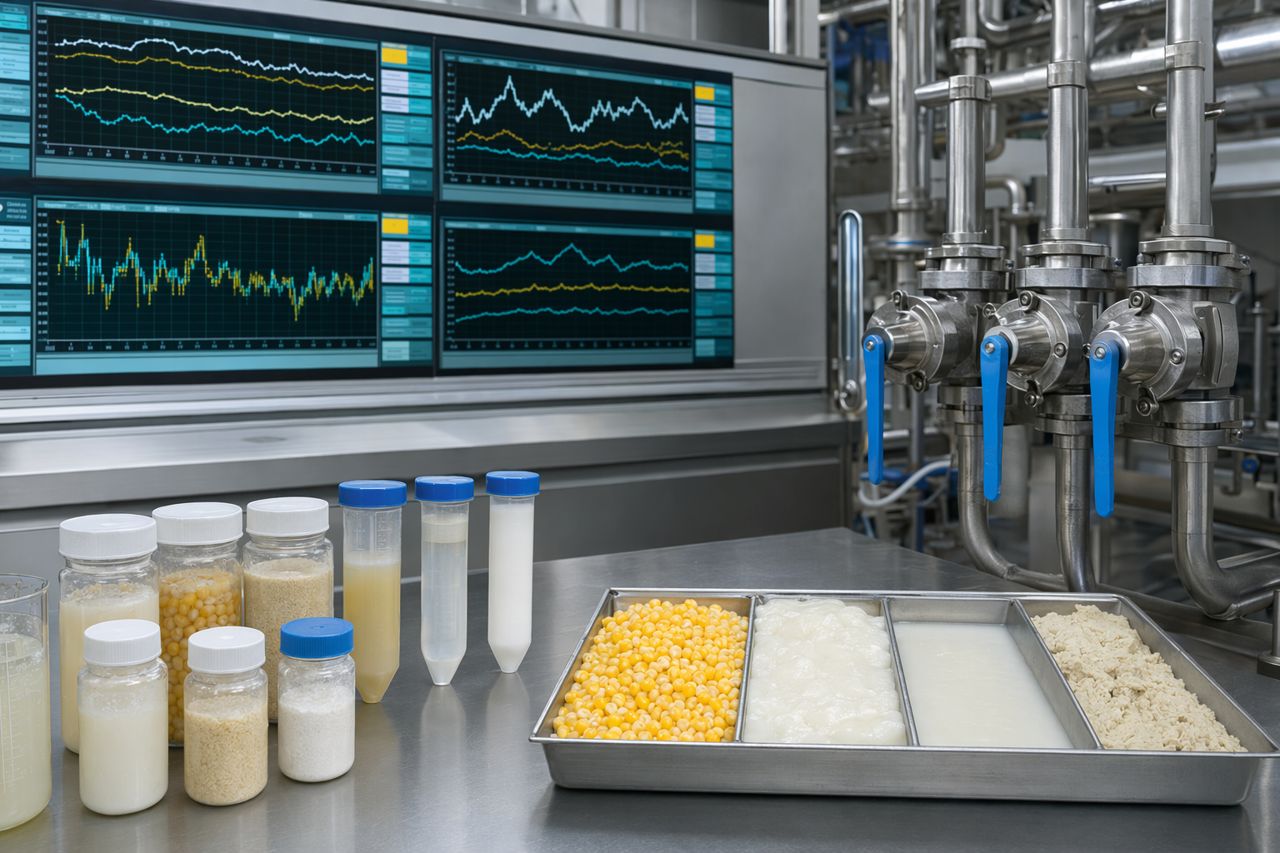
Starch-gluten separation does not end at the separator. It influences how consistently starch-rich streams enter liquefaction and saccharification. Variation at separation can show up later as different heat response, different slurry handling, or less predictable dextrose conversion readiness.
This is why process engineers often evaluate separation in terms of downstream effects, not only local performance. A cleaner and more consistent starch stream can simplify conversion management, reduce troubleshooting time, and support more stable production planning.
For procurement and technical teams, this matters when selecting an enzyme supplier. The right supplier should be able to discuss wet-end constraints, downstream conversion goals, QA documentation, lot consistency, and trial support in one conversation.
Variable 7: maintenance routines and mechanical condition
No enzyme program replaces mechanical discipline. Worn components, partially blocked screens, inconsistent nozzle condition, pump wear, and cleaning variation can all reduce separation performance. When equipment condition changes gradually, the process team may normalize the drift until yield, clarity, or filtration data makes it visible.
Practical maintenance indicators include:
- Changes in pressure response at the same production state
- More frequent manual correction
- Increased cleaning demand
- Stream quality variation after maintenance intervals
- Reduced recovery despite stable upstream inputs
A good technical review separates equipment condition from process chemistry. This prevents the plant from over-adjusting enzyme use to compensate for a mechanical issue.
How Mazerun supports evaluation
Mazerun supports corn wet mills with enzyme recommendations built around plant realities: continuous operation, defined trial windows, QA documentation, and measurable process observations. The starting point is not a universal claim. It is a review of where the plant sees constraint.
A practical engagement may cover:
- Current separation symptoms and downstream impacts
- Wet-end viscosity and flow behavior
- Fiber carryover and bound starch concerns
- Dosing window compatibility with existing operations
- Trial design that limits disruption
- Documentation needs for QA and purchasing teams
- Criteria for deciding whether the program creates enough value
For process engineers, the value is a clearer path from problem statement to plant trial. For procurement teams, the value is a supplier conversation grounded in process fit, documentation, and repeatability.
What to watch before requesting support
Before starting an enzyme discussion, it helps to gather practical observations from the separation area and downstream stages. Useful notes may include:
- When the issue appears during the production run
- Which stream shows the first visible change
- Whether the issue follows a raw material shift, maintenance interval, or load change
- How filtration, clarification, or conversion readiness is affected
- Whether operators are making more frequent manual adjustments
- What outcome would justify a trial
This information helps Mazerun recommend an enzyme approach that aligns with the plant's actual decision criteria.
Need a separation-focused enzyme discussion?
If starch-gluten separation is creating yield pressure, viscosity instability, filtration drag, or downstream conversion variation, Mazerun can help review the process constraints and propose a practical trial path.
Use the on-site request a quote form to share your application, target outcome, and operating constraints. A technical representative will respond with next steps for enzyme selection and trial support.