How Process Engineers Diagnose Viscosity Problems in Starch Slurries
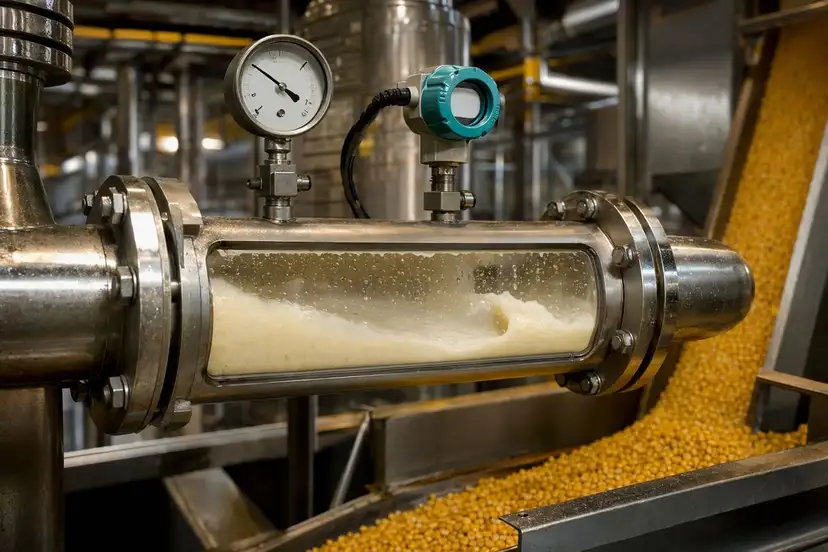
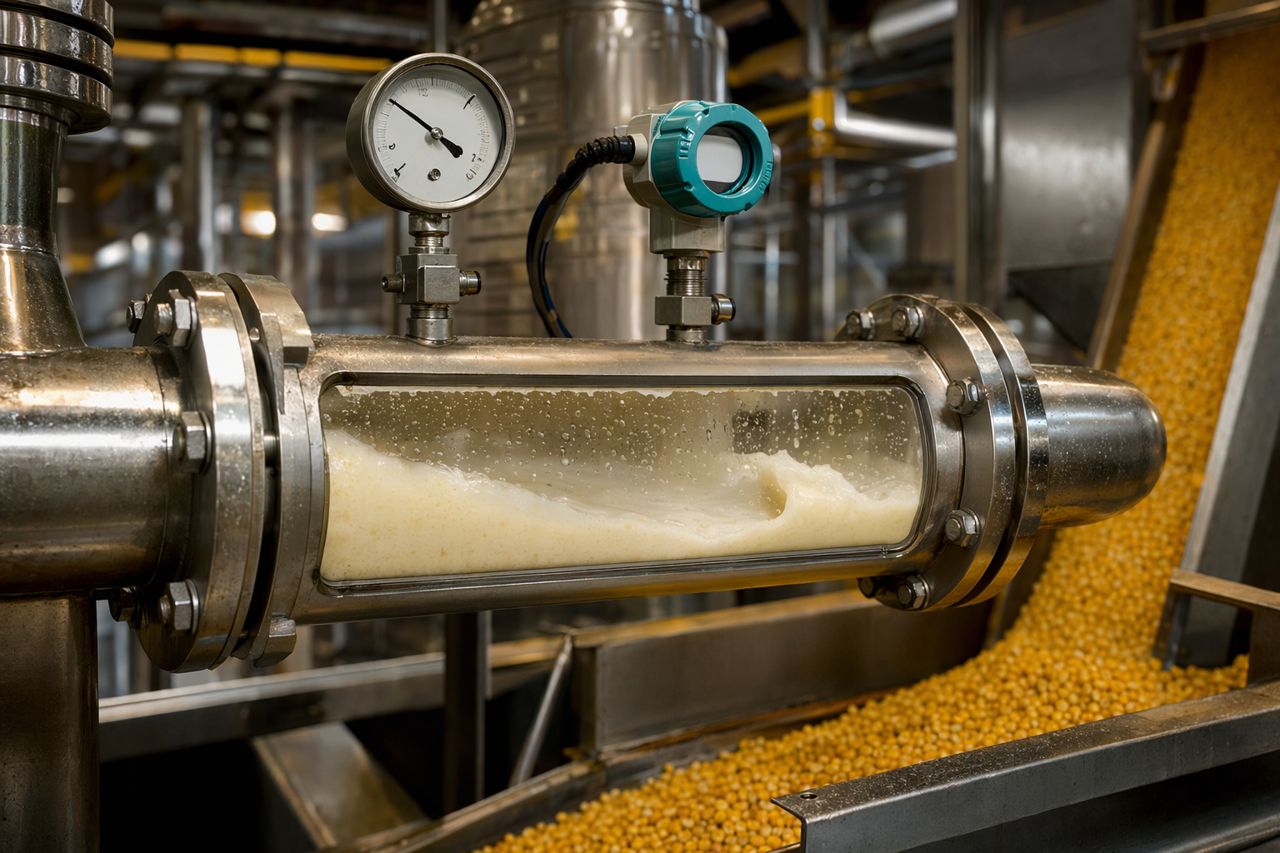
Viscosity problems rarely start at the pump where they are first noticed. In a corn wet mill, high or unstable slurry viscosity can be the visible result of upstream steep variability, grind condition, starch damage, fiber carryover, protein dispersion, solids swings, temperature drift, or an enzyme dosing window that is no longer matched to the process.
For a plant running continuously, the issue is not just thicker slurry. It is reduced transfer reliability, higher energy demand, weaker heat exchange, slower filtration, inconsistent dewatering, and more operator intervention. The right diagnosis helps the mill separate a mechanical restriction from a biochemical limitation before production time is lost.
Mazerun works as an enzyme supplier for corn wet milling with a practical focus: match enzyme selection and dosing strategy to real plant constraints, then support trials with documentation that process, quality, and procurement teams can use.
What viscosity problems look like on the plant floor
A viscosity issue is usually confirmed through more than one symptom. Common indicators include:
- Higher pump load or reduced transfer rate at the same solids target
- Slurry that moves well in one shift and poorly in the next
- Heat exchangers requiring more differential pressure or longer residence time
- Uneven tank turnover, dead zones, or slow drawdown
- Filtration drag, blinded screens, or reduced wash efficiency
- Centrifuge or hydrocyclone instability caused by inconsistent feed behavior
- Dextrose conversion steps that become harder to control because liquefaction is less uniform
- Operators adding water to regain movement, then losing downstream solids balance
The important question is whether the viscosity is coming from starch behavior, non-starch polymers, solids variability, protein/fiber carryover, or operating conditions that reduce enzyme effectiveness.
Start with a process map, not a single sample
A single lab cup can confirm that a slurry is thick. It cannot explain why. Start by mapping when the issue appears and what changed around it.
Check the time pattern
Ask whether the viscosity increase is:
- Continuous across several days
- Linked to a corn lot change
- Most visible after steeping or first grind
- Worse at higher solids
- Worse after recycle streams increase
- Occurring during temperature or pH correction events
- Connected to cleaning, maintenance, or screen replacement timing
A recurring pattern often points to a stable root cause. A random pattern often points to feed variability, dosing reliability, or an intermittent mechanical restriction.
Compare viscosity behavior against solids
Many slurry problems are blamed on enzymes when the actual driver is solids inconsistency. Before changing chemistry, verify whether the plant is holding the intended solids window. Small swings can produce large movement differences, especially when fiber fragments or fine protein are elevated.
Review where water is being used as a correction
Water addition can restore pumpability, but it often moves the problem downstream. Dilution may lower viscosity in one tank while increasing evaporator load, reducing capacity, or changing filtration balance. If operators are relying on water to keep the slurry moving, the plant needs a more controlled solution.
Common upstream causes in corn wet milling
1. Steep variability
Steeping influences kernel softening, protein matrix loosening, and how cleanly starch separates from fiber and gluten. When steep conditions drift, the mill may see more bound material entering downstream separation and conversion steps. That can increase viscosity and reduce separation clarity.
Look for:
- Corn lot shifts in hardness, moisture, or storage history
- Changes in steep residence time or temperature profile
- Inconsistent steepwater quality or recycle balance
- Higher fiber fragments after grind
- More fine suspended material entering starch streams
An enzyme program cannot replace stable steep control, but it can help widen the operating window when incoming corn quality varies.
2. Grind and fiber carryover
Over-grinding can create fine fiber and damaged starch that increases water binding and thickens slurry. Under-grinding can leave starch trapped and reduce recovery. Both conditions can disturb viscosity, but the corrective action is different.
Process engineers should compare mill settings, screen condition, fiber wash efficiency, and starch loss patterns before adjusting enzyme dosage.
3. Protein and gluten dispersion
Fine protein carryover can change slurry rheology and interfere with clean separation. If viscosity problems coincide with poorer gluten separation or higher haze in starch streams, the issue may not be starch liquefaction alone.
4. Starch damage and gelatinization behavior
When starch is damaged or exposed to heat and shear outside the intended window, hydration and swelling can increase quickly. This is especially important around heat exchangers, jet cooking, liquefaction tanks, and holding lines where residence time and temperature uniformity matter.
5. Non-starch polysaccharides
Corn fiber components can contribute to water binding and slurry drag. Targeted carbohydrase support may reduce this contribution when fiber fines are part of the problem. The best enzyme approach depends on where the material enters the process and whether the objective is movement, separation, filtration, or conversion support.
Separate mechanical restrictions from biochemical viscosity
Before changing enzyme strategy, rule out basic mechanical causes:
- Partially blocked strainers or lines
- Worn pump internals reducing actual flow
- Screen blinding or incorrect screen fit
- Dead zones in tanks or inadequate agitation
- Heat exchanger fouling
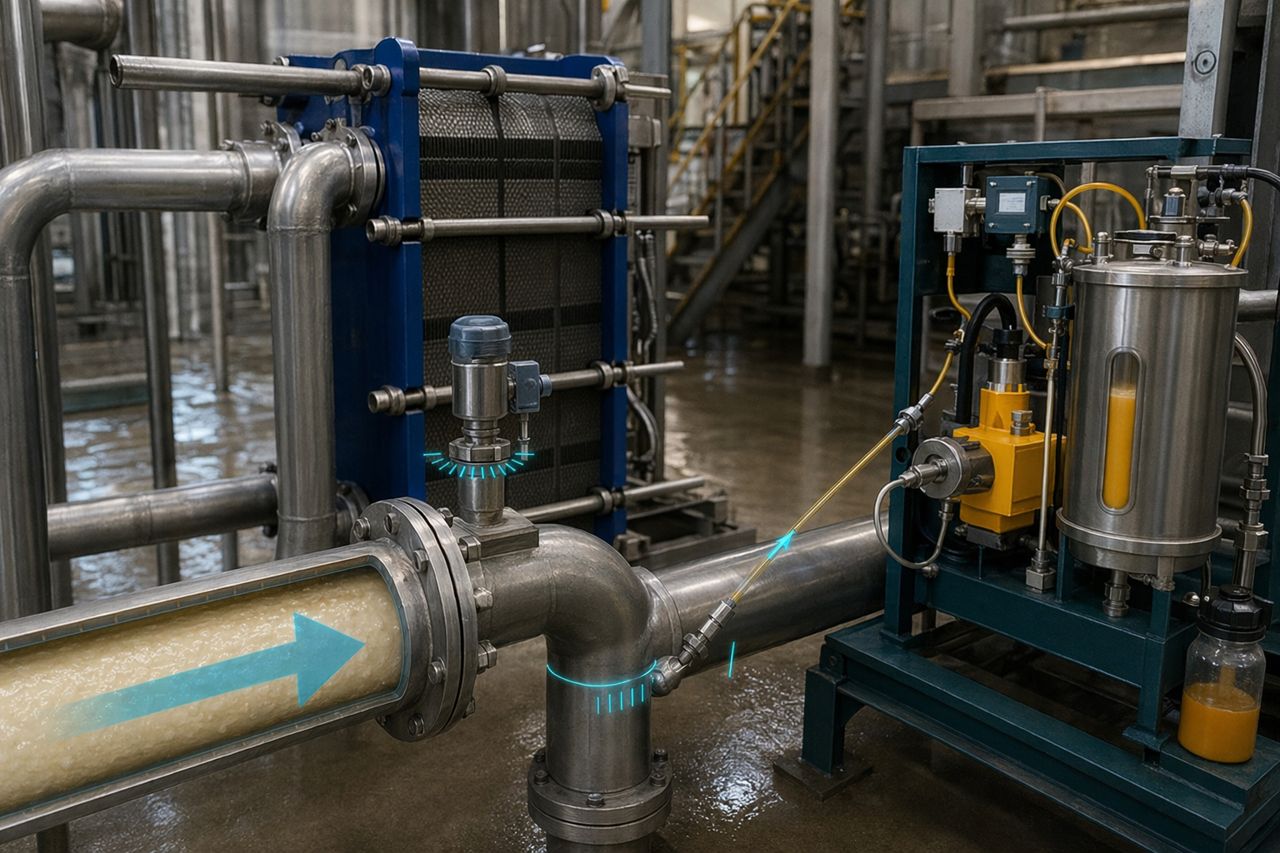
- Poor mixing at enzyme addition points
- Dosing pump drift, air ingress, or poor calibration
A biochemical viscosity problem usually shows a relationship with feed composition, temperature, pH, residence time, or enzyme contact. A mechanical problem often appears as a pressure or flow abnormality isolated to one section.
Where enzyme strategy can help
Mazerun enzyme solutions for corn wet milling are selected around the process target, not around a generic product name. In viscosity troubleshooting, the enzyme question is usually one of four cases.
Case 1: The slurry needs faster movement before separation
If viscosity is limiting transfer, tank turnover, or feed stability, the goal may be to reduce water binding from starch and non-starch components without disturbing the separation objective. The dosing point and contact time matter as much as the enzyme choice.
Case 2: Heat transfer is becoming the bottleneck
Thick slurry reduces heat transfer efficiency and can create uneven cooking or holding. A controlled viscosity reduction step can improve temperature uniformity and reduce operator intervention, especially when solids targets are high.
Case 3: Filtration and washing are slowing down
If screens, filters, or fiber wash systems are losing capacity, enzyme selection should focus on the polymer fraction causing drag. The wrong approach can make slurry easier to pump but harder to separate, so trial design needs to measure both movement and separation outcome.
Case 4: Dextrose conversion is inconsistent
If liquefaction is uneven, saccharification can become harder to control. The solution may include better liquefaction stability, improved dosing location, or a more robust enzyme package for the plant’s actual temperature, pH, and residence-time window.
Practical diagnostic checklist
Use this sequence before committing to a plant trial.
Process data to gather
- Corn lot and steep condition history
- Slurry solids trend by shift
- Pump load and flow trend at key transfer points
- Temperature profile through heat exchangers and holding tanks
- pH trend at enzyme addition and reaction zones
- Dosing pump setpoints and actual drawdown
- Residence time estimate at current throughput
- Screen, hydrocyclone, centrifuge, and filter performance notes
- Any water additions made to recover movement
Samples to compare
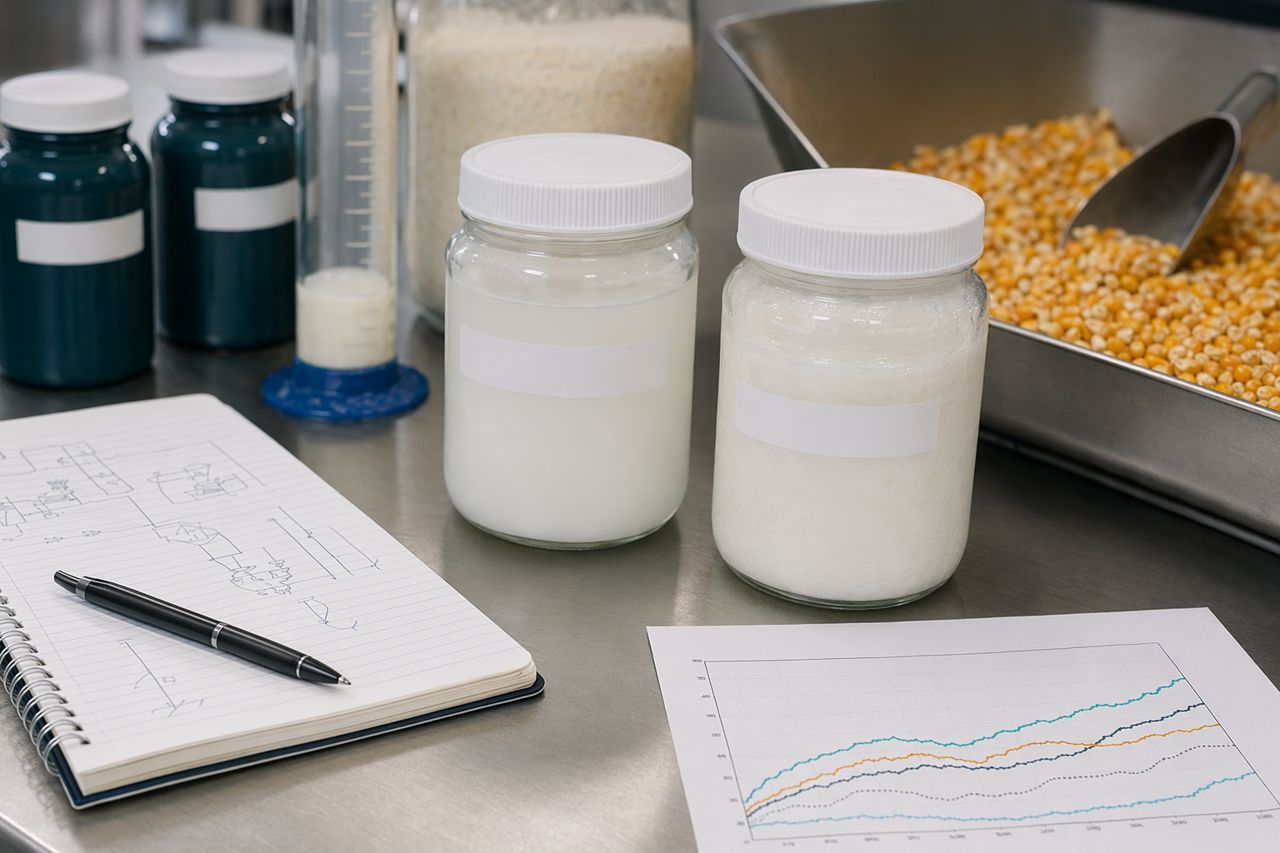
- Normal-running slurry versus high-viscosity slurry
- Before and after suspected restriction points
- Before and after enzyme addition
- Different shifts on the same corn lot
- Same process point across two corn lots
Trial endpoints to define
A useful enzyme trial should define operational endpoints before the first dose is added. For viscosity troubleshooting, practical endpoints may include:
- Lower pump load at the same solids target
- More stable transfer rate
- Improved heat exchanger performance
- Shorter tank turnover time
- Reduced filtration drag
- Better separation stability
- Less corrective dilution
- More consistent downstream conversion profile
The plant should also define what must not change: starch quality, separation balance, dextrose target, color, odor, documentation requirements, and cleaning routine.
Why dosing window matters
Even a well-matched enzyme can underperform if it is added too late, mixed poorly, or exposed to a process condition outside its effective window. In continuous operation, dosing reliability is part of the enzyme system.
Key questions include:
- Is the enzyme added where it can mix before viscosity becomes limiting?
- Is there enough contact time at the intended throughput?
- Does the temperature profile support the desired reaction?
- Is the pH stable enough for repeatable performance?
- Does recycle flow dilute, concentrate, or reintroduce the target material?
- Can the dosing pump hold steady during rate changes?
A small change in dosing location can sometimes deliver more value than a larger dose at the wrong point.
How Mazerun supports plant trials
Mazerun supports corn wet mill teams with enzyme selection, trial planning, and documentation designed for industrial decision making. Our role is to help process engineers move from “the slurry is too thick” to a controlled diagnosis and a measurable operating improvement.
Trial support can include:
- Review of the process map and likely viscosity sources
- Recommendation of enzyme candidates for the target stage
- Dosing-window guidance for temperature, pH, residence time, and mixing
- Trial plan structure with practical plant endpoints
- Support for quality and procurement documentation
- Post-trial review focused on yield, separation, uptime, and operating consistency
Request a quote
If viscosity is affecting pumping load, filtration rate, heat transfer, or dextrose conversion stability, Mazerun can help define an enzyme approach for your corn wet mill.
Use the on-site request a quote form and include your process stage, solids range, temperature window, pH range, current bottleneck, and the operational outcome you want to improve. A technical specialist will review the application and respond with a practical next step.
Request a quote