Water Reuse and Process Stability in Corn Wet Milling
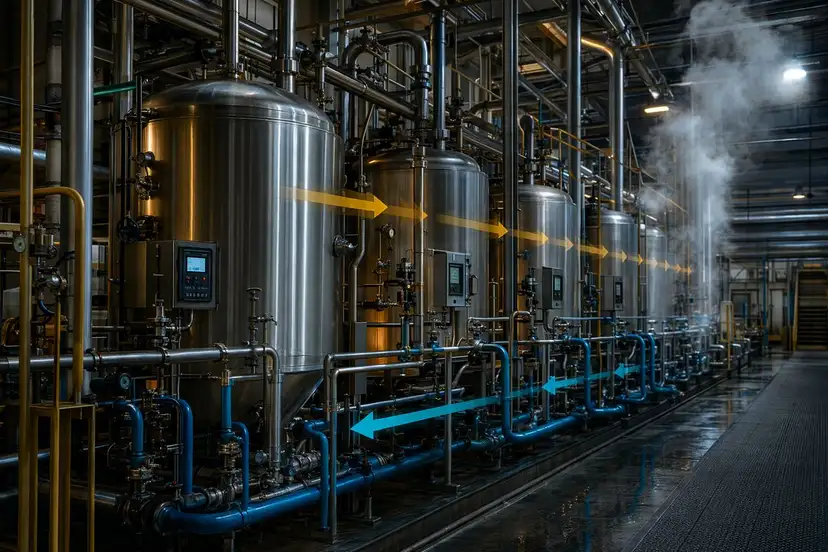
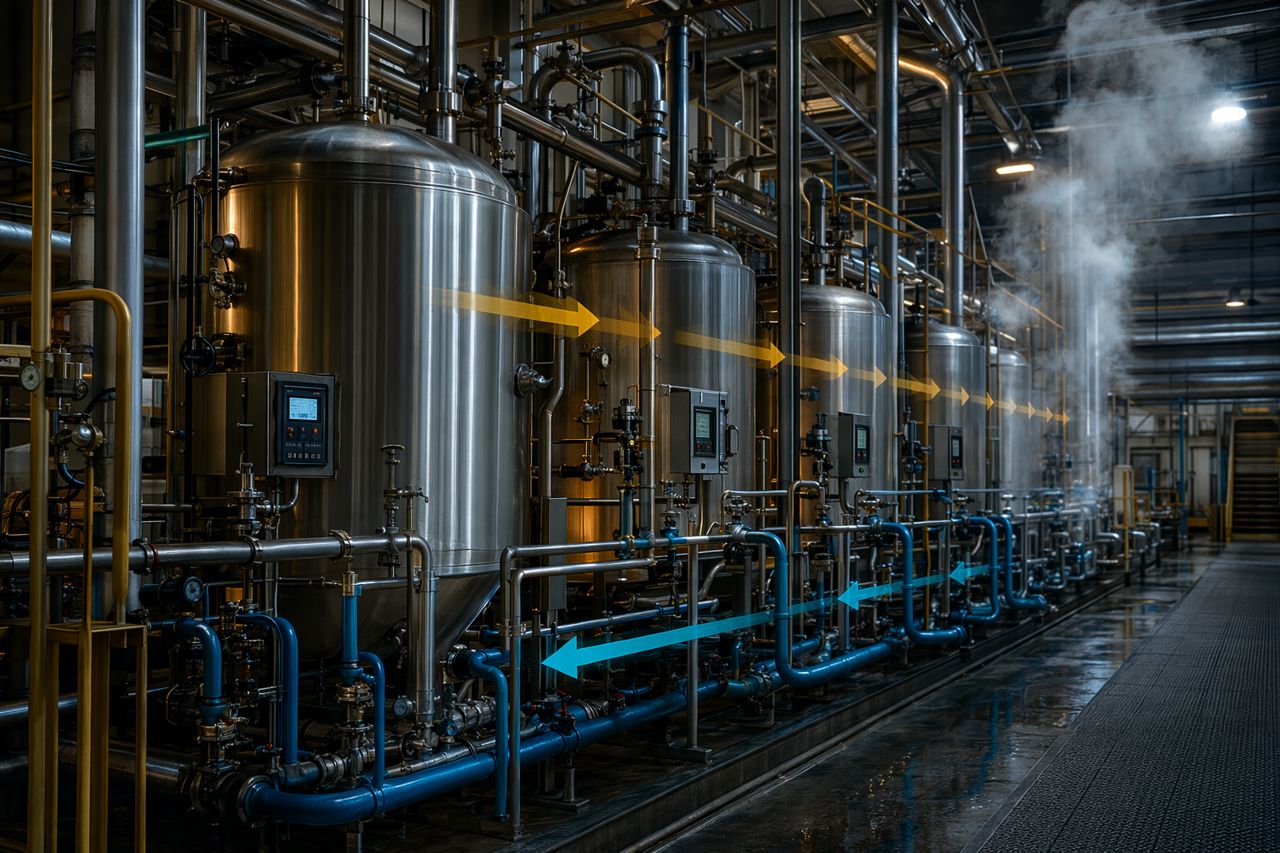
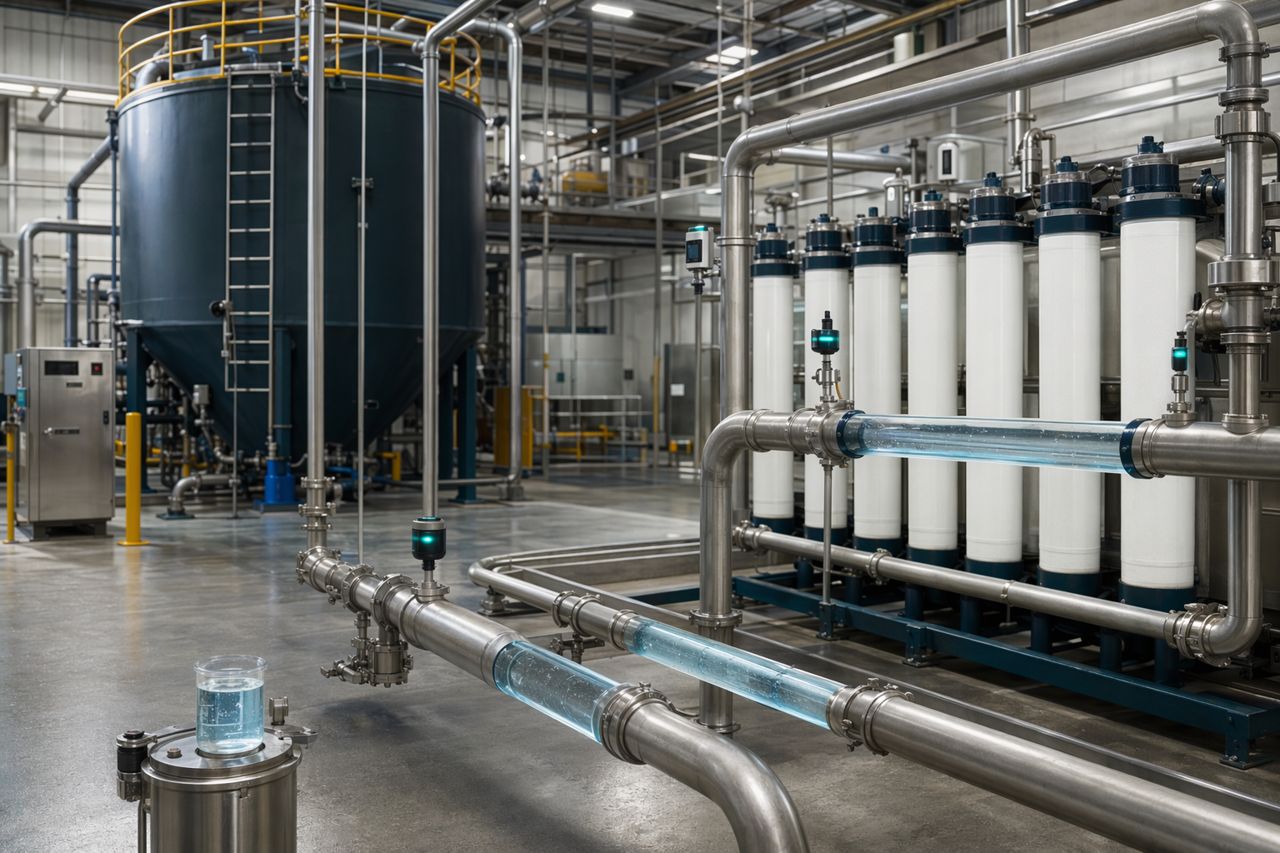
Corn wet mills are built around water movement. Steep tanks, grind systems, washing stages, starch separation, gluten concentration, fiber dewatering, liquefaction, saccharification, evaporation, and wastewater handling all depend on water quality and water balance.
As plants increase reuse to reduce intake, heat demand, and wastewater volume, process stability becomes more sensitive. Soluble solids accumulate. Steep water chemistry changes. Microbial pressure can rise. Viscosity may drift. Small shifts in one loop can appear later as separation loss, filtration bottlenecks, higher evaporator loading, or inconsistent dextrose conversion.
For a process engineer, the question is not whether water reuse is possible. It is how far each loop can be closed without disturbing yield, uptime, and product quality.
Mazerun works as an enzyme supplier for corn wet milling with a focus on practical plant constraints: dosing windows, solids handling, separation efficiency, viscosity management, and documentation for continuous operations.
Water reuse changes the mill’s operating baseline
In a corn wet mill, reused water is not simply water. It carries a history of the process.
Depending on where it returns, reused water may contain:
- Soluble proteins and peptides
- Dissolved starch fragments and dextrins
- Fine fiber and suspended solids
- Organic acids from steeping and microbial activity
- Residual salts and process aids
- Heat, pH history, and variable conductivity
- Microbial load from warm holding areas
None of these are automatically problematic. Many mills rely on controlled counter-current movement to recover value and reduce discharge. The challenge is accumulation. When recirculation is pushed without a clear control strategy, the process can become less forgiving.
Common symptoms include:
- Slower or less consistent starch-protein separation
- Rising viscosity in slurry, filtrate, or syrup streams
- Increased wash water demand to hit quality targets
- Filtration rate decline and more frequent cloth attention
- Greater load on evaporators and wastewater treatment
- More variable liquefaction or saccharification response
- Unplanned cleaning events tied to fouling or microbial growth
Water reuse is therefore a process-stability project, not only a sustainability project.
Steep water management is the first control point
Steeping sets the tone for the rest of the mill. Kernel hydration, protein matrix softening, germ release, fiber behavior, soluble extraction, and microbial control are all linked to steep conditions.
When steep water is reused aggressively, the steep house may see more variability in organic load, acidity, dissolved solids, and microbial population. These factors can affect steep time, grind response, and downstream separation.
A stable steep water strategy usually considers:
- Return stream origin and variability
- Holding time and temperature exposure
- Solids carryover into steep tanks
- pH and acidity profile across the steep battery
- Microbial monitoring and sanitation discipline
- Impact on germ separation and fiber washing
- Downstream effect on starch purity and gluten quality
Enzymes may support steep optimization when selected for the actual process objective. In some plants, the priority is improving release and reducing mechanical stress. In others, it is moderating viscosity, improving fiber washability, or protecting starch separation from variable incoming corn and recycled process water.
The right enzyme program should be tested against the mill’s own operating limits, not selected from a generic catalog.
Microbial control affects more than sanitation
Warm, nutrient-rich water loops are attractive to microbes. In wet milling, microbial growth can influence acidity, odor, corrosion risk, organic load, viscosity, and final product consistency.
Microbial control is often managed through sanitation procedures, temperature control, chemical treatment, water routing, and residence-time discipline. Enzyme selection should fit inside that program. It should not create new instability in reused water loops or interfere with existing plant controls.
From a process standpoint, microbial drift may show up indirectly:
- Faster pH movement in holding tanks
- More foam or gas formation
- Unexpected viscosity increase
- Higher soluble organic load
- Filtration inconsistency
- Increased wastewater treatment variability
When troubleshooting, it is useful to map enzyme dosing points against water return paths. If an enzyme remains active into a reused stream, that can be beneficial, neutral, or undesirable depending on the loop. The practical question is whether the activity supports the process target without creating late-stage effects in another unit operation.
Wastewater load is tied to separation efficiency
Water reuse and wastewater treatment are connected by mass balance. If more starch, protein, fine fiber, or soluble organics escape primary recovery, they often appear later as wastewater load or evaporator burden.
This is why separation efficiency is a core sustainability lever. Improving recovery in the main process can reduce pressure on downstream utilities.
Enzyme programs may contribute by helping plants:
- Reduce slurry viscosity before critical separation steps
- Improve fiber release and washing behavior
- Support more consistent starch conversion where syrups are produced
- Reduce carryover that raises downstream organic load
- Stabilize filtration performance during feedstock variation
- Lower the frequency of process upsets that lead to off-spec streams
The value is not only chemical cost or enzyme cost. It is water moved, solids recovered, steam avoided, downtime reduced, and wastewater variability controlled.
Process stability depends on dosing windows
Continuous operations need practical dosing. A technically strong enzyme that only works inside a narrow or unrealistic window may not be suitable for a corn wet mill.
For water reuse applications, dosing strategy should account for:
- Where the enzyme contacts substrate
- How long the stream remains in the useful temperature and pH range
- Whether the enzyme travels into a reuse loop
- Interaction with sulfite, acidity, salts, and solids
- Shear, mixing, and local concentration at the injection point
- Compatibility with cleaning and sanitation routines
- The plant’s ability to monitor the response in real time
Mazerun supports trial planning around observable plant indicators: flow stability, viscosity trend, separation response, filtration rate, yield movement, dextrose conversion consistency, and wastewater load. The goal is a dosing window that operators can run reliably, not a lab condition that disappears at scale.
Where enzymes can support water-loop stability
Different wet mills have different bottlenecks. In a water reuse project, enzyme selection should be linked to the unit operation causing instability.
Steep and grind support
Target: more consistent kernel softening, component release, and downstream separation.
Potential plant indicators:
- Germ separation stability
- Grind energy trend
- Fiber behavior in screens and wash systems
- Starch release and protein carryover
- Steep time sensitivity during corn variation
Viscosity reduction
Target: more predictable slurry movement, heat transfer, filtration, and separation.
Potential plant indicators:
- Pump load or flow variability
- Hydrocyclone or centrifuge response
- Filtration rate and pressure trend
- Evaporator feed consistency
- Reduced need for corrective water addition
Liquefaction and saccharification support
Target: stable starch conversion under real plant feed conditions.
Potential plant indicators:
- Liquefaction viscosity profile
- Conversion consistency
- Dextrose target reliability
- Reduced rework or blending pressure
- Heat exchanger and hold tube cleanliness trends
Fiber and soluble solids management
Target: improved washability and lower loss of recoverable value.
Potential plant indicators:
- Fiber moisture and wash efficiency
- Starch loss to fiber stream
- Suspended solids in return water
- Organic load to wastewater
- Centrate or filtrate clarity
Practical trial design for reused water conditions
A water reuse trial should not be isolated from the loop it affects. The plant should know what changes, where the water returns, and which downstream measurements will confirm whether the program is helping.
A useful trial plan includes:
- Baseline period: Capture normal variability before dosing changes.
- Loop map: Identify return water origins, residence time, and major solids contributors.
- Dosing point review: Confirm mixing, temperature, pH, and operator access.
- KPI selection: Choose measurable indicators tied to the bottleneck.
- Stepwise dosing: Avoid abrupt changes that mask cause and effect.
- Shift communication: Make sure operators know what response to watch.
- QA documentation: Confirm product handling, storage, traceability, and specification requirements.
- Post-trial review: Compare yield, stability, wastewater load, and operating cost impact.
Mazerun’s technical team can help structure trials around plant realities: continuous operation, variable corn, limited shutdown windows, and the need for defensible QA documentation.
What buyers should ask an enzyme supplier
When evaluating an enzyme supplier for corn wet milling, process engineers and procurement teams should look beyond the product name.
Useful questions include:
- Which wet milling unit operation is the enzyme designed to support?
- What plant symptoms indicate that it is a good fit?
- How sensitive is performance to pH, temperature, solids, and residence time?
- Can it be dosed into the existing process without new complexity?
- What happens if the treated stream enters a water reuse loop?
- What documentation is available for QA, traceability, and regulatory review?
- How will the supplier support baseline collection and trial interpretation?
- What operating indicators should improve if the program is working?
The strongest supplier relationship is technical and evidence-oriented. The enzyme should fit the mill’s control philosophy and make the process easier to run.
A stable reuse strategy protects yield and uptime
Water reuse can reduce fresh water demand and wastewater volume, but it must be balanced against separation performance, microbial control, and operational stability. In corn wet milling, the best results usually come from a combined approach: water-loop mapping, sanitation discipline, separation monitoring, and enzyme programs selected for the real bottleneck.
Mazerun supplies enzyme solutions for corn wet mills that need practical support across steep optimization, viscosity reduction, starch conversion, and yield troubleshooting.
If your plant is reviewing water reuse, steep water behavior, wastewater load, or process stability, Mazerun can help assess the dosing window and design a controlled plant trial.
Request a quote through the on-site form to discuss your corn wet milling process, target bottleneck, and trial requirements.